 Skip to content



Written by
Paul M.

You turn on the tap for a glass of water, and what comes out is a murky, rust-coloured stream. That alarming sight of brown rust coloured water brings one question to mind: is it safe to drink discolored water? The good news is that in almost all cases, the answer is yes. According to provincial health guidelines, the iron that causes this discoloration is considered an aesthetic issue—meaning it looks and tastes unpleasant—rather than a direct health hazard.
The culprit is almost always tiny particles of iron, essentially rust, that have been stirred up and are now flowing through your pipes. This can happen for several reasons, from a city water main disturbance to aging plumbing inside your home. Figuring out the source is the key to getting your clear water back. By acting as a simple “water detective,” you can quickly narrow down the possibilities and decide on the right next step.
Summary
- Diagnose Source: Check if brown water is only from the hot tap (indicating water heater sediment/anode rod issue) or from cold taps (pointing to municipal or home plumbing).
- Rule Out Municipal: If cold water is brown, check with neighbors. A shared issue is likely temporary city maintenance and can be cleared by flushing household pipes.
- Address Home Plumbing: Persistent rusty cold water unique to your home suggests internal pipe corrosion (often galvanized steel), requiring a professional plumber’s inspection and likely pipe replacement.
The 3 Common Culprits: Is the Rust Coming From the City, Your Pipes, or Your Heater?
When you see that unsettling rust-coloured water, the source of the problem is rarely a mystery. That rusty tinge almost always comes from one of three specific places. The most common culprits are:
- The City’s Water System: A temporary disturbance, often from municipal water main flushing or a nearby fire hydrant being used.
- Your Home’s Plumbing: A persistent issue, typically caused by older galvanized pipe corrosion inside your walls.
- Your Hot Water Heater: An isolated problem where the tank itself or a component inside it is rusting.
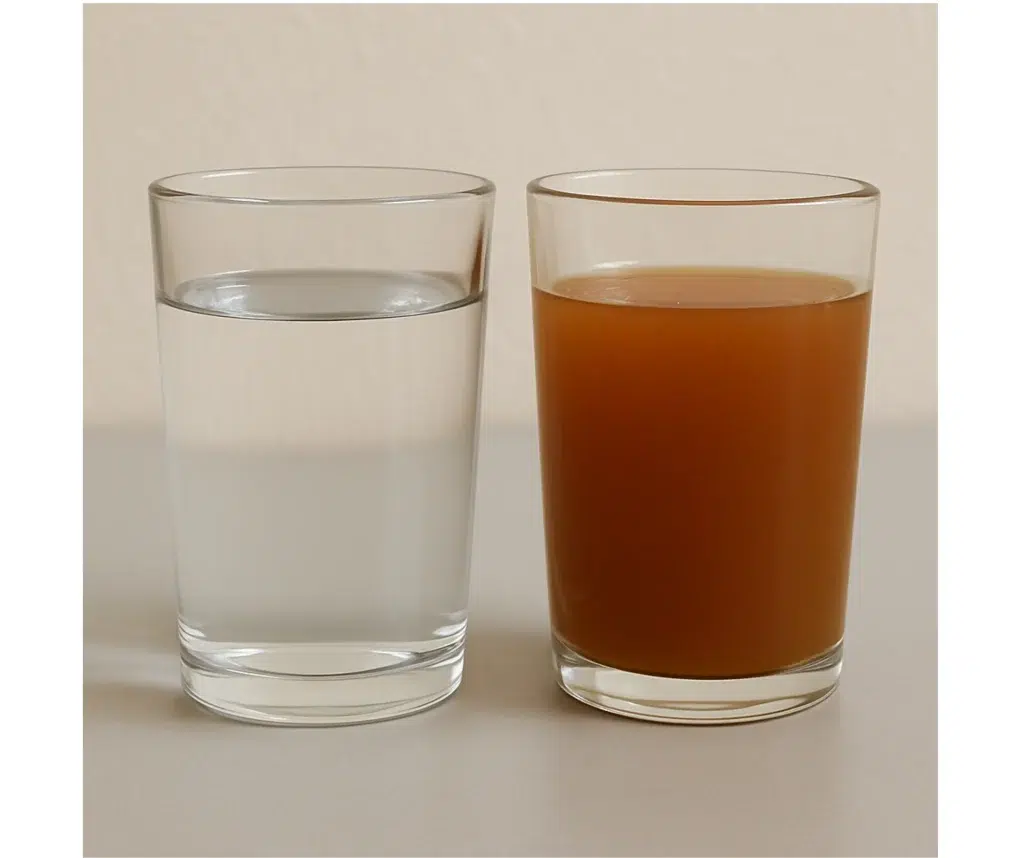
A city-level issue is temporary and usually resolves itself within hours. However, if the source is your own pipes or water heater, the problem will stick around until it’s addressed. The first clue is as simple as checking your hot and cold taps.
The First Test: Is Your Water Brown on Hot, Cold, or Both?
This simple temperature test can instantly cut the list of potential culprits in half. Go to any sink in your house and turn on only the cold water. Let it run for a moment and check its color. Now, turn off the cold and run only the hot water. The difference between what you see in these two scenarios will point you directly toward the source.
If you have brown water from the cold tap, the problem is happening before the water even reaches your heater. Because all of your home’s water starts out cold, seeing rusty tap water here means the issue lies in the pipes themselves. The next question is, are they your pipes or the city’s?
However, if your cold water runs clear but the hot water comes out with that rusty hue, you’ve likely found your answer: the issue is inside your water heater. This loose sediment gets mixed into the water every time you ask your heater to do its job.
If Only Hot Water is Brown: Your Water Heater Is the Likely Suspect
Discovering that only your hot water has a rusty tint is a huge clue. It isolates the problem to one appliance, and thankfully, it’s often a fixable issue. This is a common source of rusty tap water, and it doesn’t mean you need a whole new plumbing system.
Most water heaters contain a part called an “anode rod.” Think of it as a bodyguard for your tank. Its entire job is to attract corrosive elements and rust away instead of the tank itself. Over several years, this rod sacrifices itself and completely dissolves. Once it’s gone, the rust begins to attack the steel tank lining, releasing those brown particles into your hot water supply.
Whether the cause is a depleted anode rod or simply years of sediment buildup, the solution requires a professional. Figuring out how to flush hot water heater sediment or replace an anode rod is a job for a qualified plumber for rusty water pipes. They can inspect the tank, determine if it can be serviced, or advise if it’s time for a replacement.
If Cold Water is Brown: Is it Just Your House or the Whole Neighbourhood?
Seeing brown water from the cold tap means the problem starts before your water heater. Before you worry about your pipes, however, you need to determine if the source is your property or the city’s.
Often, the cause is a temporary disturbance in the public water system. Events like municipal water main flushing, nearby construction, or a fire department using a hydrant can stir up sediment that normally sits at the bottom of the city’s large pipes. In these cases, the water is still considered safe, just unappealing.
To figure this out, call or text a next-door neighbor. If they have rusty water too, the issue is with the city’s supply and will likely resolve itself in a few hours. You can then try to flush your system by running a cold water faucet, like an outdoor spigot or bathtub tap, for 15 to 20 minutes. This is how to clear rusty water from pipes when the cause is temporary.
If the water runs clear after flushing, your problem is solved. However, if your water stays stubbornly brown while your neighbor’s is clear, it strongly suggests the rust is originating from the pipes inside your own home.
The Persistent Problem: What to Do About Old, Rusty Pipes
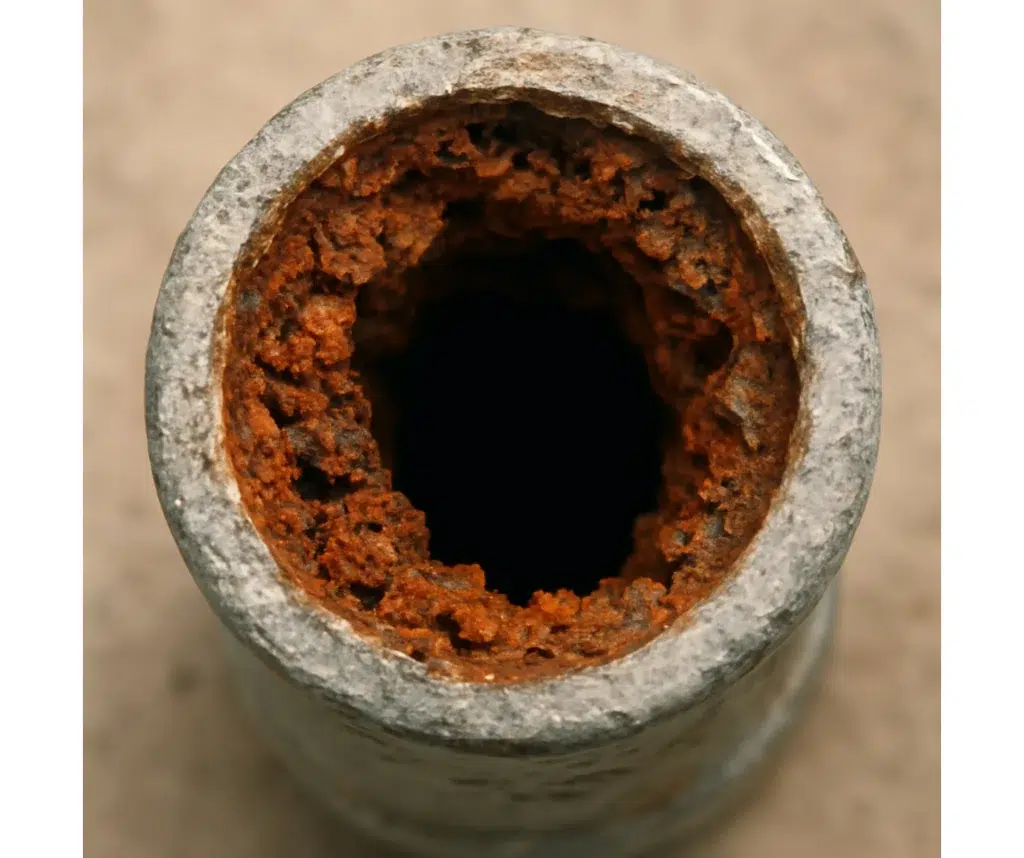
If you’ve confirmed the rusty water is unique to your house, the investigation points directly to the plumbing inside your walls. In many homes built before the 1960s, the primary culprit is galvanized pipe corrosion. These steel pipes were coated in zinc, but after decades, that coating wears away, exposing the iron pipe to water and oxygen. The inevitable result is rust, which flakes off and is carried to your faucets.
This diagnosis often clicks into place when you realize the issue is worse after the water has been sitting unused. Noticing a burst of rusty tap water after vacation or first thing in the morning is a classic symptom. While the water sits stagnant in the pipes overnight, it has more time to pick up these loose rust particles.
Unfortunately, corroding pipes are a systemic issue that requires professional evaluation. The right next step is to call a licensed plumber for rusty water pipes. They can perform an inspection, sometimes with a small camera, to confirm the material and condition of your plumbing and provide a clear plan for replacing the old lines with modern copper or PEX pipes.
Beyond the Color: Can Rusty Water Stain and Damage Your Home?
That rusty tint isn’t just an eyesore; it’s a warning sign. The same iron particles that color the water will readily settle out, leaving behind stubborn orange-brown streaks on toilets, sinks, and tubs. If you’re wondering, “can rusty water stain clothes?” the answer is a definitive yes, especially on light-colored fabrics. As an immediate precaution, hold off on washing any whites until your water runs clear again.
Over time, this issue goes beyond surface stains. The mineral sediment can build up inside your water heater, dishwasher, and washing machine, potentially leading to clogs and reduced efficiency. These are common iron in well water symptoms but also affect city-water homes with older plumbing. For those with a persistent problem, the long-term solution is often a whole house filter for iron, which removes the damaging particles before they ever reach your faucets or appliances.
Your Quick-Start Action Plan for Clear Water
Instead of feeling alarmed by brown water, you now have a clear method for finding its source. Use this quick diagnostic checklist to pinpoint the problem and find your answer.
- Test Hot & Cold Taps: Run them separately. If only the hot water is brown, the culprit is likely your water heater. It’s time to call a plumber for rusty water pipes to have it inspected.
- Check with a Neighbor: If the cold water is brown, ask a neighbor if they have the same issue. If they do, it’s a municipal problem. Wait a few hours, then learn how to clear rusty water from pipes by flushing your cold taps for 20 minutes.
- Call a Plumber for Persistent Issues: If the rusty water is only in your house and doesn’t clear after flushing, it’s time to have a plumber investigate if your home’s pipes are the source.
For recurring problems, a professional can also advise on a long-term fix, such as a whole-house filter. That brown water is no longer a mystery—it’s a signal you understand, and you know exactly who to call and what to ask.
Conclusion
Rusty water is primarily an aesthetic concern rather than a health hazard, but it signals potential system damage. By methodically testing hot vs. cold taps and checking with neighbors, homeowners can quickly identify the source—whether it’s a temporary city disturbance, a failing water heater, or aging internal plumbing. This diagnostic approach empowers you to take appropriate action, from simple flushing to calling a professional plumber for assessment and repair. Addressing the root cause protects your appliances and home from long-term staining and sediment damage.
Frequently Asked Questions
Is rusty water from city mains safe for consumption?
According to health guidelines, the iron causing discoloration is an aesthetic concern, not a direct health hazard. However, it is unpleasant and can stain fixtures and laundry.
What does brown water only from the hot tap typically indicate?
This usually points to sediment buildup or corrosion inside the water heater, often from a depleted anode rod. A professional plumber should inspect and service the unit.
What is the long-term solution for persistent rusty water from aging home plumbing?
For chronic issues from corroding galvanized pipes, the definitive solution is repiping with modern materials (e.g., copper, PEX) and potentially installing a whole-house iron filtration syst

