 Skip to content




Written by
Paul M.

Replacing your entire heating system costs thousands. Upgrading your controls costs hundreds, and delivers immediate savings. In fact, smart scheduling alone can reduce heating bills by up to CAD 550 per year (depending on your home size), and Ontario’s IESO estimates connected thermostats cut heating energy use by 8% compared to manual thermostats.
For Canadian homeowners, this is the smartest first step toward lower bills and better comfort. This guide covers everything you need to build a smart home heating system that works with what you already have.
Summary
- Smart thermostats and radiator valves are the highest-ROI upgrades for existing heating systems, with savings of 8–15% on heating costs.
- Compatibility matters: radiator valves work with hydronic systems (boilers), while forced-air systems need thermostats and zoned dampers.
- Canadian rebates make it affordable: BC Hydro now offers free smart thermostats, Ontario provides CAD125 rebates, and utilities across the country reward peak-shaving participation.
What Makes a Heating System “Smart”?
A smart heating system connects your heating equipment to the internet and lets you control it automatically based on your habits, schedule, and even your location.
The key components include smart thermostats that replace your old dial, smart radiator valves that control individual rooms, and sensors that monitor temperature and occupancy. What ties them together is automation—your system learns when you’re home, when you’re away, and adjusts accordingly without you lifting a finger.
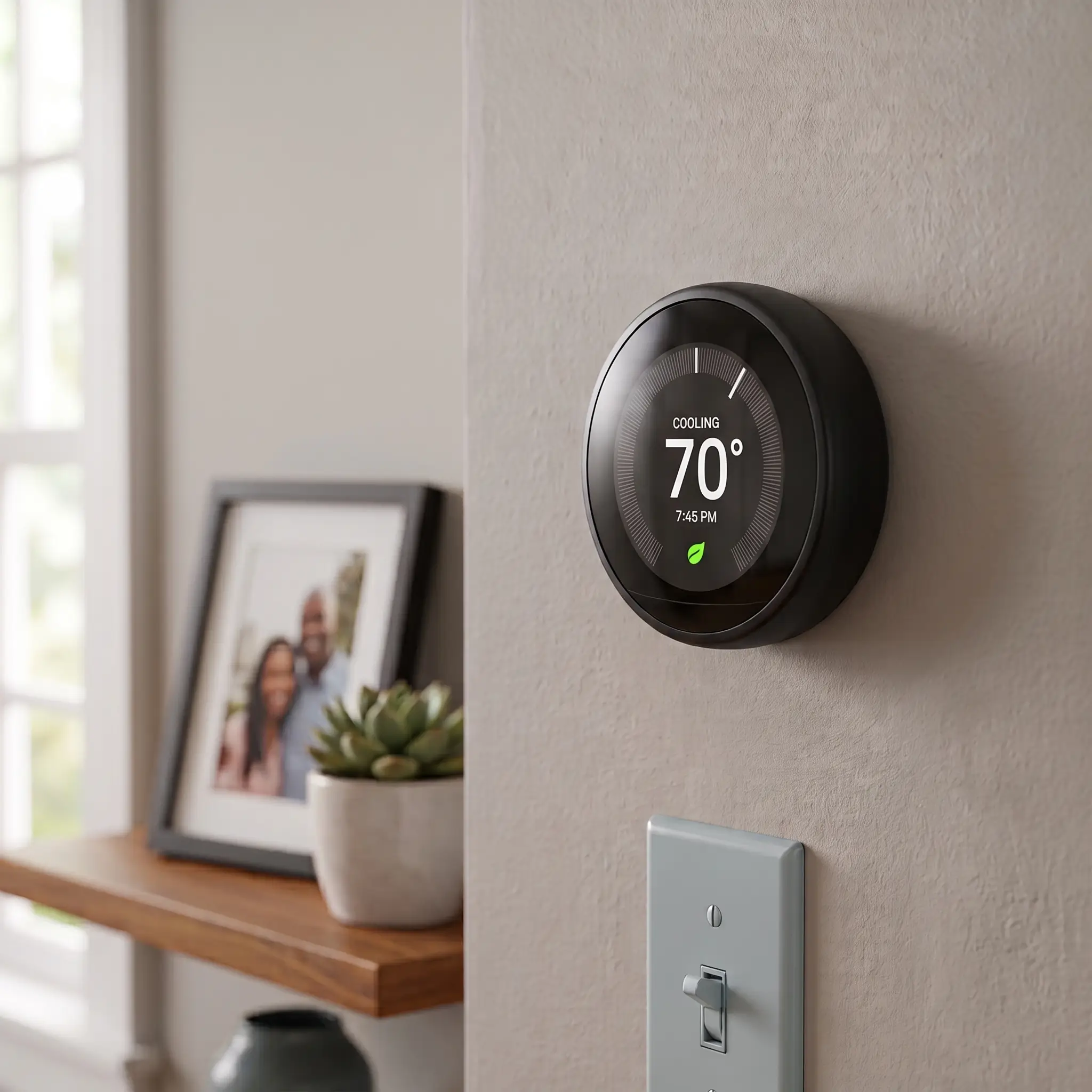
Best Smart Home Heating System Components
Smart Thermostats
These are the brain of your smart heating setup. The best options for Canadians in 2026 include EcoBee, Google Nest, and Mysa (a Canadian company specializing in electric heating).
Netatmo’s new Thermostat original, launching January 2026, supports Matter and works with gas boilers, oil boilers, heat pumps, and even wood stoves. It can be self-installed in under 30 minutes.
Smart Radiator Valves (TRVs)
If you have radiators, smart TRVs are a gamechanger. They let you control temperature room-by-room—heating only where you need it. Smart radiator valve works with 90% of hot-water radiators and includes 10 adapters for major brands.
Zoned Heating Controls
Zoning lets you split your home into separate heating areas. For hydronic systems, smart TRVs handle this naturally. For forced-air systems, you’ll need motorized dampers in your ductwork controlled by your thermostat.
Smart Sensors and IR Emitters
Room sensors detect temperature and occupancy, ensuring your thermostat reads the temperature where you are—not just at the hallway thermostat. Some systems also use IR emitters to control mini-split heat pumps or window AC units.
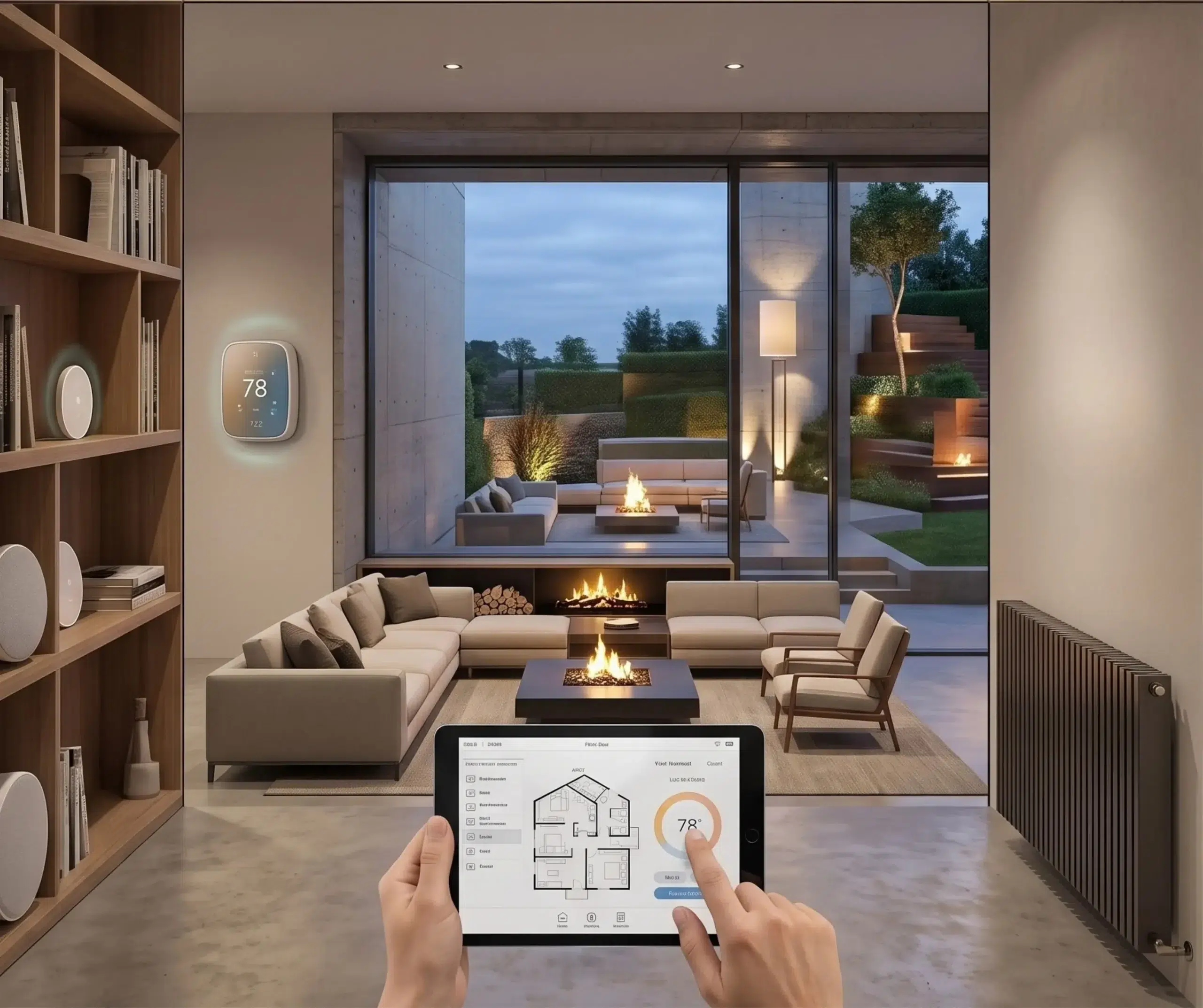
How to Pair Smart Controls with Your Radiator for Home Heating System
Here’s the practical part. If you have a boiler and radiators, follow this sequence:
Step 1: Start with a smart thermostat. This controls your boiler. Netatmo, Tado, and EcoBee all work with most boilers.
Step 2: Add smart TRVs to each radiator. Replace your manual valves. Installation takes about 10 minutes per radiator—even in winter, since the water stays in the pipes.
Step 3: Create zones. Group radiators by room or floor. Set different schedules for bedrooms, living areas, and spare rooms.
Step 4: Enable smart features. Open-window detection automatically turns off radiators when windows open. Geofencing adjusts heating based on whether anyone is home.
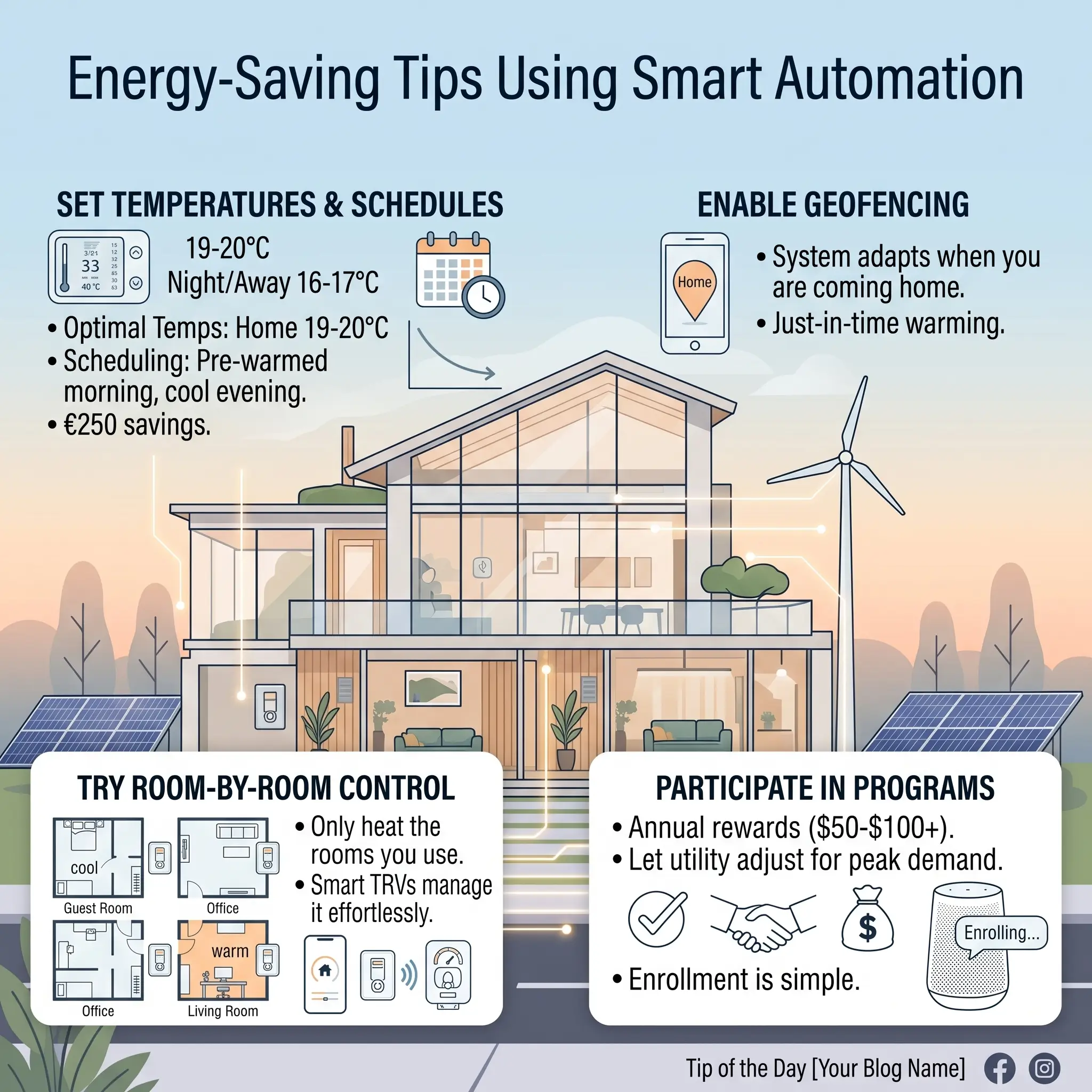
Energy-Saving Tips Using Smart Automation
Set the right temperatures. Aim for 19–20°C when home, 16–17°C at night or when away. Every 1°C reduction cuts heating consumption by about 7%.
Use scheduling. Program your system to warm up before you wake and cool down after you leave. Netatmo’s scheduling alone can save up to CAD 550 per year.
Enable geofencing. Your phone tells your heating system when you’re heading home, so it warms up just in time—without heating an empty house all day.
Try room-by-room control. Don’t heat the guest room or unused office. Smart TRVs make this effortless.
Participate in utility programs. BC Hydro’s Peak Saver gives you CAD 50–100 annually for letting them adjust your thermostat during peak demand. Ontario’s Peak Perks offers similar rewards.
Compatibility Guide (Works with Boiler/Furnace/Heat Pump)
Boilers and Hydronic Systems: Smart thermostats work with most boilers. Smart TRVs are fully compatible and ideal for zoned control.
Forced-Air Furnaces: Smart thermostats work well. Smart TRVs won’t work—you’ll need zoned dampers instead.
Heat Pumps: Most smart thermostats work with heat pumps, but check compatibility carefully. Netatmo supports air-to-water heat pumps. Some low-voltage thermostats explicitly exclude heat pumps.
Electric Baseboard Heaters: Mysa is designed specifically for this—a Canadian-made solution for high-voltage electric heating.
Budget vs Premium Smart Heating Setups
Budget Setup (CAD 150–250): One smart thermostat (EcoBee3 lite or Google Nest) plus a few budget TRVs. This covers your main living areas and delivers the biggest savings.
Mid-Range (CAD 400–700): Smart thermostat plus TRVs for every room. Netatmo’s system with Matter support and per-room scheduling.
Premium (CAD 800+): Whole-home zoning with smart thermostats for multiple zones, TRVs throughout, and integration with smart home ecosystems like Apple Home or Google Home via Matter.
Conclusion: Start Smart, Save More
You don’t need to replace your furnace or boiler to cut your heating bills. Smart thermostats and radiator valves deliver immediate savings at a fraction of the cost of a new system.
For Canadians in 2026, the incentives are better than ever. BC Hydro is giving away smart thermostats. Ontario offers rebates on it, and matter support means your devices will work with whatever smart home ecosystem you choose.
Frequently Asked Questions
What is the best smart home heating system for beginners?
A smart thermostat like Google Nest or EcoBee paired with smart radiator valves is the easiest entry point. These work with most existing systems and can cut heating costs by 10–15%.
Do smart radiator valves work with any home heating system?
Smart TRVs work with most hydronic systems (boilers and radiators). They’re not compatible with forced-air furnaces or ducted heat pumps, which require smart thermostats and zoned dampers instead.
Are there Canadian rebates for smart thermostats?
Yes. BC Hydro now offers free smart thermostats from Mysa and Sinopé to electric-heated homes, with rewards of CAD 50–100 for peak-shaving participation. Ontario’s Home Renovation Savings program provides a CAD 125 rebate on eligible thermostats.

