 Skip to content




Written by
Paul M.

If your energy bills keep climbing while your home still feels drafty, you’re not alone. Heating eats up a big chunk of household energy costs, and most homes lose efficiency through preventable issues—leaky ducts, trapped air in radiators, or outdated controls.
The good news? You don’t need a full system replacement to see real savings. This guide breaks down how your heating system works, then walks through eight proven strategies that can cut costs and boost comfort.
Summary
- Know your system first: Heating works in four stages—generation, distribution, delivery, and control. Every strategy targets one of these stages.
- Start cheap: Sealing drafts, leaking radiators, and changing filters can improve efficiency by 5–15% for very little money.
- Go big later: Once your home is sealed and controls are smart, larger investments like heat pumps pay off best.
How Your Home Heating System Works?
Before diving into upgrades, it helps to understand the basic flow of a home heating system. Most systems operate in four stages:
- Heat generation happens at the source—a furnace, boiler, or heat pump. Efficiency here is measured by AFUE (Annual Fuel Utilization Efficiency). A 90% AFUE rating means 90% of the fuel’s energy becomes usable heat, while 10% escapes through the chimney. Older systems may run at just 56–70% AFUE, while modern high-efficiency units reach 90–98.5%.
- Distribution moves that heat through your home. In forced-air systems, a blower pushes warm air through ducts. In hydronic systems, a pump circulates hot water through pipes to radiators or baseboards. This is where big losses happen—ducts in attics or crawl spaces can lose up to 35% of the heat they carry.
- Delivery is how heat reaches your living spaces—through vents, radiators, or radiant floors.
- Control is your thermostat and any zoning equipment that tells the system when and where to heat.
8 Efficiency Upgrades That Actually Work
Here are 8 ways get the efficiency that you want.
1. Seal Air Leaks and Add Insulation
This is consistently the highest-impact, lowest-cost improvement you can make. The EPA estimates that air sealing paired with insulation can cut heating and cooling costs by about 15%. The DOE’s Weatherization Assistance Program reports average annual bill reductions of around $372 per weatherized home.
Air leaks around windows, doors, foundations, and soffits let cold air in and warm air escape. Caulking and weatherstripping are the cheapest fixes. Attic insulation matters too—if your attic floor has less than R-38 insulation, adding more is relatively inexpensive and pays back quickly.
Why it works: You’re reducing the temperature difference between inside and outside, which slows heat loss. It’s physics—the smaller the gap, the slower the heat escapes.
2. Upgrade to a Smart Thermostat
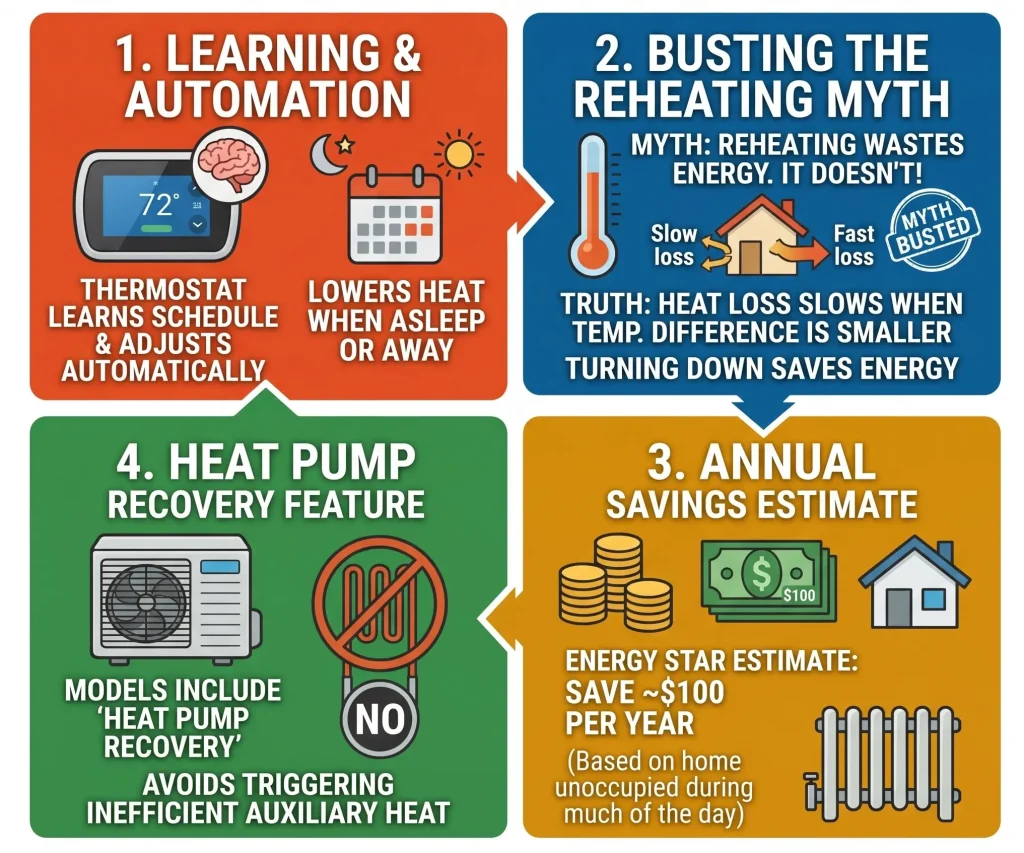
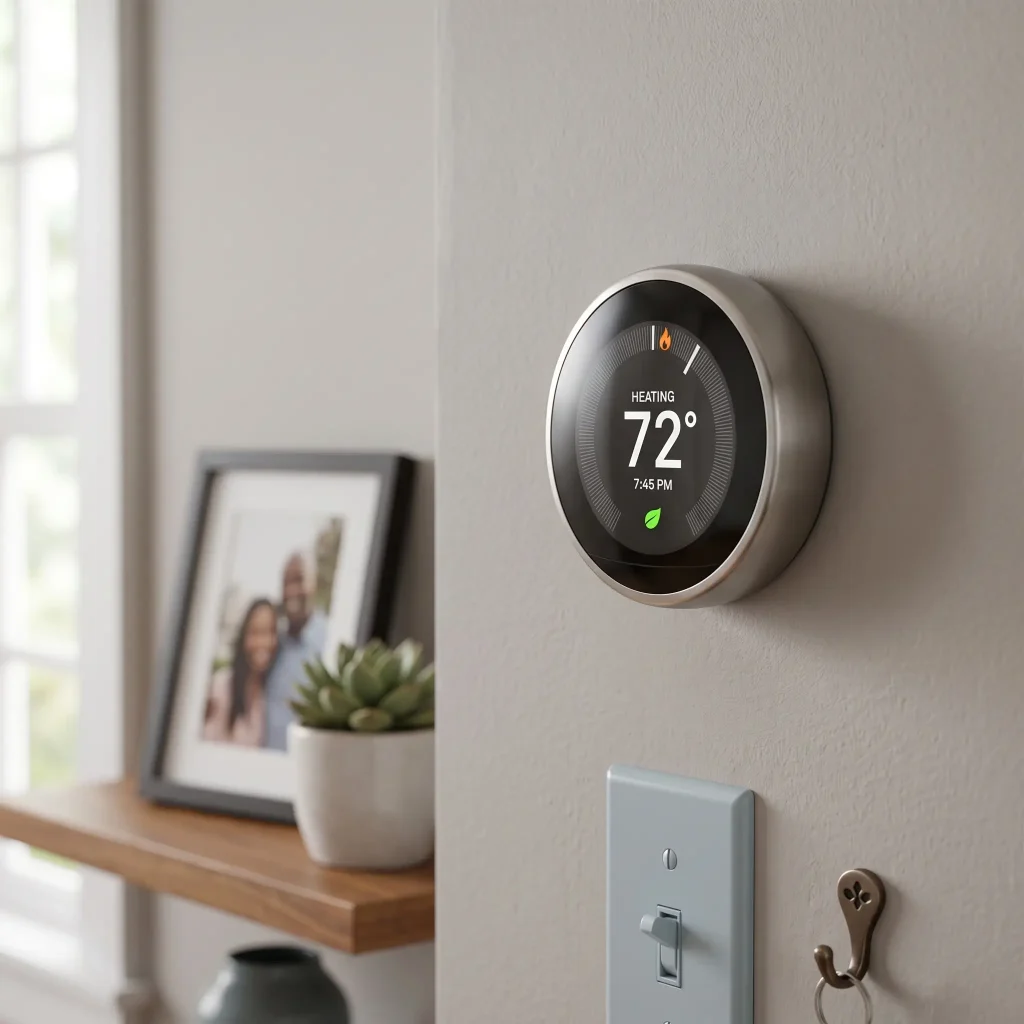
A smart thermostat learns your schedule and adjusts temperatures automatically—lowering heat when you’re asleep or away. The common myth is that reheating a cold house wastes energy. It doesn’t. Turning down the thermostat almost always saves energy because heat loss slows when the indoor-outdoor temperature difference is smaller.
ENERGY STAR estimates that a smart thermostat can save around $100 per year if your home is unoccupied during much of the day. Some models also include “heat pump recovery” to avoid triggering inefficient auxiliary heat.
Why it works: You stop paying to heat an empty house. The savings come from reduced runtime, not from magical efficiency gains.
Bleed and Balance Radiators
If your radiators are warm at the bottom but cold at the top, trapped air is blocking hot water from filling the entire unit. Bleeding releases that air, restoring full heat output.
Balancing is the next step: adjusting valves so every radiator gets adequate flow. In systems where some rooms never get warm while others overheat, balancing solves the distribution problem.
Bleed radiators at least once a year, ideally before winter. You’ll need a bleed key and a cloth—no fancy tools required.
Why it works: A radiator half-filled with air is essentially a half-sized radiator. Bleeding restores the full surface area for heat transfer.
4. Replace Filters Regularly
A dirty filter restricts airflow, forcing your furnace to work harder and longer to distribute heat. That wastes energy and accelerates wear on components. ENERGY STAR recommends checking your filter monthly during heavy-use months and replacing it at minimum every three months.
Homes with pets, allergy sufferers, or high dust levels may need more frequent changes. A clean filter also prevents dust buildup inside the system, cutting maintenance costs and extending equipment life.
Why it works: Your furnace is designed to move a specific volume of air. A clogged filter is like trying to breathe through a straw—the system strains to compensate.
5. Install Zoned Heating Controls
Traditional systems heat every room equally, even if you’re only using part of the house. Zoned systems divide your home into sections, each controlled by its own thermostat. Dampers direct airflow only where it’s needed.
For example, you can keep the living room warm during the day while letting bedrooms stay cooler until evening. This is especially valuable in larger homes or multi-story houses where upper floors overheat while lower floors stay cold.
Why it works: You eliminate the waste of heating unoccupied spaces. The system runs less overall because it’s not conditioning every room to the same temperature at once.
6. Add Reflective Radiator Panels
Radiator reflector panels are thin foil sheets placed behind radiators on external walls. They reflect heat back into the room instead of letting it escape through the wall.
The Energy Saving Trust confirms these panels work—they’re most effective on uninsulated external walls. They can reduce your carbon footprint by 60–110 kg per year depending on region and save around £18–£20 annually on bills.
Skip them on internal walls—there’s no benefit since that heat stays in your home anyway.
Why it works: Radiators emit heat in all directions. Without a reflector, a good portion goes into the wall and outside. The foil redirects that heat back into the room.
7. Schedule Annual Professional Maintenance
An annual tune-up keeps your furnace or boiler running at peak efficiency. A well-maintained system uses less energy, and regular maintenance can save as much as 30% compared to a neglected system.
Technicians clean burners, check combustion, inspect heat exchangers, and verify electrical connections. They also catch potential safety issues—like carbon monoxide leaks—before they become emergencies. Annual maintenance also preserves your manufacturer’s warranty, which often requires documented service.
Why it works: Small issues compound. A slightly misaligned burner or dirty component forces the system to compensate, wasting fuel all season.
8. Consider a Heat Pump or Hybrid System
This is the biggest investment on the list, but also the most transformative. Heat pumps don’t burn fuel—they move heat from outdoor air into your home using electricity. Modern cold-climate models work down to -15°F.
The efficiency advantage is dramatic: for every unit of electricity consumed, heat pumps deliver two to four units of heat. No combustion system can match that.
A hybrid system pairs a heat pump with a furnace backup for extreme cold, giving you efficiency most of the year and reliability when temperatures plummet.
Heat pumps also provide cooling in summer, eliminating the need for a separate AC system. With available incentives, the upfront cost can drop by as much as $10,000 depending on your location.
Why it works: You’re changing the fundamental physics of how heat is produced. Instead of generating heat through combustion (which loses energy up the flue), you’re moving existing heat with electricity.
When to Call a Professional
Some upgrades are straightforward DIY projects. Others require licensed expertise.
Call a professional if:
- Your furnace or boiler is over 15 years old and needs frequent repairs
- You smell gas or suspect a carbon monoxide leak
- You’re installing a heat pump, zoned system, or new boiler
- Your ducts are in unconditioned spaces and need sealing
- You want to verify insulation levels with a blower door test
An energy audit is often the smartest first call. It identifies exactly where your home is losing heat and prioritizes upgrades for maximum ROI.
Conclusion
Improving your home’s heating efficiency doesn’t require a complete overhaul. The most effective approach is sequential: tighten your home’s envelope first, then optimize controls, then upgrade equipment when it makes economic sense.
Start with the cheap wins—bleed your radiators, change your filter, seal obvious drafts. Add a smart thermostat. Then evaluate whether insulation or duct sealing would unlock bigger savings. When your system reaches end-of-life, a heat pump or hybrid setup becomes the logical next step.
Each upgrade compounds the others. A well-sealed home needs less heat. A smart thermostat stops wasting the heat you produce. Zoned controls ensure it goes where it’s needed. Together, they can cut your heating bills significantly while making your home more comfortable year-round.
Ready to start? Schedule an energy audit to identify your home’s specific weaknesses, then tackle the highest-ROI upgrades first. Your wallet—and your comfort—will thank you.
Frequently Asked Questions
What is the cheapest way to improve my home heating system’s efficiency?
Start with low-cost fixes like sealing drafts, bleeding radiators, and replacing filters. These can improve efficiency by 5–15% with minimal upfront cost. A smart thermostat is the next step. It is easy to install and can save around $100 annually.
How do I know if my heating system needs replacing or just upgrading?
If your system is over 15 years old, needs frequent repairs, or your energy bills keep rising despite maintenance, replacement is likely more cost-effective than upgrading. A system with a pilot light also needs replacement.
How much can I realistically save by improving my home heating system?
It depends on your starting point. A home with an old furnace could save 30% or more on annual heating bills. An already-efficient home might see 10–15%. The EPA estimates air sealing and insulation alone can cut heating costs by about 15%, while a smart thermostat adds roughly $100 per year.

