 Skip to content



Written by
Paul M.

You walk into your home and something just smells… off. It’s not the trash or last night’s dinner. A musty, dusty, or even dirty-sock odour seems to be coming from the vents. If this sounds familiar, the source is likely your heat pump, a surprisingly common issue for homeowners in Ontario.
Fortunately, different heat pump smells point to different causes. Some are normal, like the brief burning smell when you first switch to heating mode during the first cold snap. Others, however, are your system’s way of telling you it needs attention before a small issue becomes a larger one. This guide will help you identify what that odour means and how to get your home smelling fresh again.
Summary
- Identify by Odor: Different smells indicate specific issues: a brief “burning” smell is likely dust burn-off, while persistent “musty” or “dirty sock” odors point to a clogged filter/drain or bacterial growth on the coil.
- DIY vs. Professional: Homeowners can replace air filters and clear clogged condensate drain lines, but persistent musty smells or bacterial issues require professional cleaning of the evaporator coil.
- Emergency Smells: A “fishy” or “burning plastic” smell signals an electrical fault, and a “rotten egg” odor could indicate a gas leak; both require immediate system shutdown and a professional emergency call.
The “Burning” Smell: Normal Burn-Off vs. a Real Problem
The first time you switch your system from “cool” to “heat,” you might notice a distinct burning smell. While alarming, it’s usually nothing to worry about. Over the summer, dust settles on your heat pump’s indoor electric backup heating elements. When these elements power on for the first time, that dust burns away, creating a short-lived odor much like a toaster burning off a few crumbs.
This initial burn-off smell should disappear within an hour, often in just 15 to 30 minutes. If the odor fades quickly and doesn’t return, you can relax. However, if a burning smell lingers for more than an hour, gets stronger, or smells like melting plastic, it is not normal. This is a red flag for an electrical issue. In this case, turn your system off at the thermostat and your breaker box, and call a professional.
The “Musty” Smell: Check Your Air Filter First
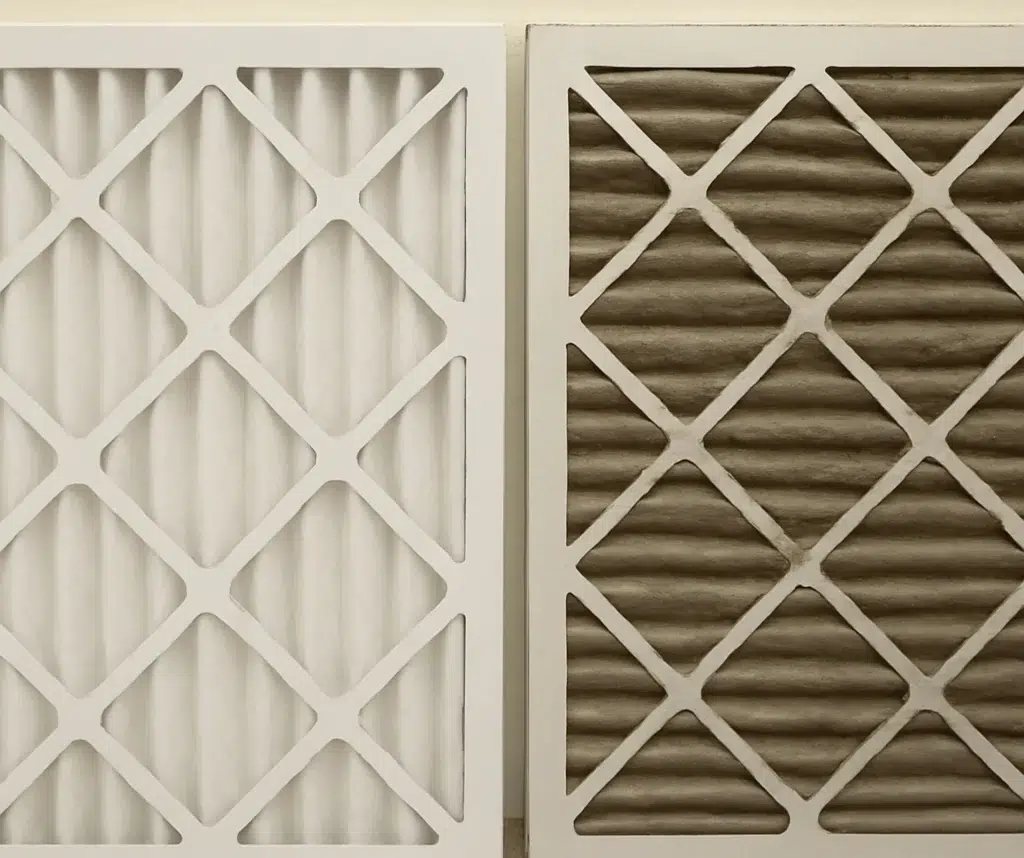
If the air from your vents has a dusty or stale odor, the most likely culprit is a clogged air filter. The filter’s job is to capture dust, pollen, and dander before that air circulates through your house. When it gets overloaded, the trapped debris can develop its own unpleasant, musty smell, which then gets blown into every room.
Checking the filter is the easiest place to start. You don’t need any tools, just a few minutes.
- Turn off your system at the thermostat for safety.
- Locate the filter slot on your indoor unit (often a large metal cabinet in a closet, basement, or attic).
- Slide out the old filter and hold it up to a light.
If you can’t see light through the filter, it’s long overdue for a change. A dirty filter not only causes odors but also forces your heat pump to work harder, leading to higher energy bills and poor air quality. If your filter looks clean but you still notice a damp smell, the problem likely involves moisture.
The “Damp Basement” Smell: A Clogged Condensate Line
If a clean filter didn’t solve the problem and the air has a distinct “damp basement” odor, the issue is almost certainly trapped water. In cooling mode, your system pulls moisture out of humid air, much like how a cold glass of water “sweats.” This collected water, called condensate, is normal and needs a safe way to exit your home.
That’s the job of the condensate drain line—a small pipe that carries this water away. Over time, this drain can get blocked with dust, sludge, or algae. When this happens, water backs up into a collection pan inside your unit. This standing water quickly becomes a breeding ground for mold and mildew, causing a musty smell.
On a hot day when your air conditioner has been running, go outside and find the small PVC pipe exiting your house. It should be dripping slowly. If the ground is dry, it’s a strong sign the water is trapped inside.
DIY Fix: How to Unclog a Blocked Drain Line
You can often clear this blockage in minutes with a wet/dry vacuum. Clearing the line not only eliminates the musty smell but also prevents a potential water backup that could damage your home. Before you start, turn off the power to your system for safety.
- Turn Off the Power: Switch the system to “Off” at the thermostat. For extra safety, turn off the breaker that powers your indoor HVAC unit.
- Find the Outdoor Exit: Locate the PVC pipe outside your house where the condensate line drains.
- Create Suction: Press the hose of your wet/dry vac firmly against the pipe’s opening. Use your hands or a cloth to create a good seal. Turn the vacuum on for 1-2 minutes to suck out the blockage.
- Flush the Line (Optional): To kill any remaining algae, pour a cup of distilled white vinegar down the line’s access point indoors (often a T-shaped pipe with a cap). A brief vinegar smell is normal afterward.
If the smell persists, the problem might be on the indoor unit’s evaporator coil, which is a job best left for a professional heat pump cleaning service.
The “Dirty Socks” Smell: Unmasking Dirty Sock Syndrome
If the odor from your vents is less musty and more like a locker room, you’re not imagining things. When a heat pump smells like dirty socks, it’s often a well-known issue HVAC pros call Dirty Sock Syndrome. This distinct smell points directly to bacteria building up on the damp surface of the indoor coil.
This is most common during the mild weather of spring and fall. In these seasons, your heat pump cycles on and off frequently, making the coil wet but not running long enough to dry it out. This creates a perfect damp, dark environment for smelly microbes to thrive.
While you can handle a drain line clog, cleaning bacteria embedded deep within the coil’s delicate fins requires specialized cleansers and tools. This is a job best left to a professional. During a service call, a technician can deep-clean the unit and may suggest installing a UV light inside your unit to prevent future mold and bacteria growth.
Danger Signs: 3 Smells That Mean You Should Call a Pro Immediately
While a musty odor is a nuisance, some smells are urgent warnings of a serious, potentially dangerous problem. A fishy or burning plastic smell points to a dangerously overheating electrical component, while a rotten egg smell could signal a natural gas leak nearby. Do not try to troubleshoot these chemical odors on your own; they demand immediate action.
If you notice any of the following odors, act right away to protect your home and family.
- Burning Plastic or a “Fishy” Smell: This indicates a failing electrical part, like melting wire insulation or an overheating motor.
- Action: Immediately turn off your heat pump’s power at your home’s main breaker panel. Then, call an HVAC professional.
- Rotten Eggs or Sulphur: This is the classic sign of a natural gas leak.
- Action: Do not use any electronics or flick any light switches. Leave your home immediately. Once you are safely outside, call your gas company’s emergency line.
- Gunpowder or Acrid Smell: This sharp, chemical odor often means you have a shorted-out circuit board or a fried fan motor.
- Action: Just like with a burning smell, go to your breaker panel, shut off the power to the unit, and call for emergency service.
Your Action Plan to Prevent Future Heat Pump Smells
The best way to deal with unpleasant smells is to stop them before they start. With a few simple habits, you can shift from reacting to problems to preventing them entirely.
Here is your preventative maintenance checklist for a fresh-smelling home:
- Change Your Filter Routinely: Every 1-3 months, depending on your home. This is the single easiest step for better air quality.
- Keep the Outdoor Unit Clear: Ensure at least two feet of clearance around your outdoor unit, free of leaves, snow, and shrubs.
- Schedule Annual Professional Maintenance: A technician can perform a deep clean and safety check on parts you can’t reach.
Think of an annual professional heat pump cleaning service like a dental cleaning for your home—it’s a small investment that clears out hidden buildup and catches tiny issues before they become big, smelly problems. You’re no longer just dealing with an appliance; you’re actively managing the health and comfort of your home, one breath of fresh air at a time.
Conclusion
Effectively addressing heat pump odors requires identifying the specific smell to determine the appropriate action. Homeowners can manage simple issues like dirty filters and clogged drains, but persistent musty smells or complex electrical/biological problems demand professional service. Implementing a routine preventative maintenance plan—including regular filter changes, keeping the outdoor unit clear, and scheduling annual professional cleanings—is the most reliable strategy. This proactive approach protects system efficiency, prevents future odors, and ensures the long-term comfort and air quality of your home.
Frequently Asked Questions
1. What does a persistent “dirty sock” smell from my heat pump indicate?
This “Dirty Sock Syndrome” is typically caused by microbial growth (bacteria/mold) on the damp indoor evaporator coil, often in spring/fall. It requires professional cleaning with specialized agents to resolve.
2. When should I call for emergency HVAC service due to a smell?
Immediately call for emergency service if you detect a “fishy” (electrical overheating) or “rotten egg” (possible gas leak) smell. Shut the system off at the breaker first for electrical odors.
3. What is the most common and easily fixable cause of a musty HVAC odor?
A clogged, dirty air filter is the most frequent cause. Replacing the filter every 1-3 months eliminates the odor source and improves system airflow and efficiency.

