


Written by
Paul M.

The failure of your heat pump can make you cold and angry. Fortunately, troubleshooting is available in a number of steps that you consider before involving an expert. We are going to take you through some of the most common problems and solutions that will help you restart your heat pump in this guide. The comprehension of such measures will save you money and time and make your house a comfortable home.
Summary
- Understand the fundamentals of the operation of a heat pump in order to self-diagnose, and begin by making some basic tests: power, thermostat, and air filters.
- Check exterior unit, debris, or ice, observe any indications of low refrigerant (poor performance, hissing) and check ductwork to ascertain leaks, blockages.
- In case of any problems or need of electrical, refrigerant and compressor troubleshooting, call out an expert and have a regular service to avoid any future failures.
Understanding Heat Pump Operation
Basic Functionality
Everyone needs to know the working mechanism of a heat pump in order to troubleshoot successfully. Understanding how your system works in its simplest form will help you to figure out problems and put solutions into use. It is also this information that can make you in a position to make informed knowledge when talking issues with a professional technician.
Heat pumps are a versatile system of HVAC that is used to either move heat or cool your homes by relocating it to the other place. During the winter season, a heat pump takes the heat out of the exterior air, even when the exterior air is chilly, and it forces it to the inside. In summer, it works the other way round, where it dehumidifies the indoor air and cools it outdoors and works like an air conditioner.
Seasonal Performance
This rather simple purpose can allow you to trace down where the issue may reside. Assuming your system is not heating during the winter it might not be utilizing the outside air to heat the system. On the other hand, during summer it may not be cooling your house properly.
Heat pump can be well maintained and will be efficient at any temperature outside the building, however, when it starts to malfunction it may create a cause of unease. It is based on this basic understanding that you can start troubleshooting your heat pump.
Common Heat Pump Issues
Your heat pump can break down because of a number of problems. We will discuss some of these typical issues and its corresponding troubleshooting measures. It is important to determine the cause of the malfunction so as to implement the appropriate correction resulting to a successful outcome.
External Factors
Other outside influences, like weather conditions, can also have an influence on the performance of your heat pump. As an example, abnormally low temperatures might put the unit in jeopardy of getting heat and the storm debris may block the outdoors unit.
Effective troubleshooting requires that one understands external factors. In case you live in a cold climate or high temperatures, such knowledge will make you prepare your heat pump better to the change of the season.
Initial Troubleshooting Steps
When the heat pump is not functioning, the initial process in the troubleshooting is to confirm whether power is present. Even the most properly maintained heat pump cannot work without power.
Power Supply
Ensure that your system is receiving electricity:
- Circuit Breaker Check: Originally, check the circuit breaker of your heat pump. Having done so, make it reset and see whether this helps solve the problem.
- Power Outlet: it is important that the outlet that you connect to your heat pump is operational. By plugging in an extra device this will be able to verify whether the outlet or the heat pump is the problem.
- Power Switch: Find a power switch on or close to the heat pump unit. It might sometimes be switched off accidentally; ensure that it is on.
- Wiring Inspection: Check the wiring to determine whether it is damaged or not. The wiring may have problems caused by rodents or wear as time progresses. In case you notice worn out wires, then call a professional technician.
Thermostat Settings
Make sure that you have adjusted your thermostat. It must be programmed to turn on to heat during the winter season and turn off to cool during the summer. Test the temperature also they must be that which you would like to see.
Thermostat Calibration
Assuming the settings fail to solve the problem, you should make sure that even the thermostat is calibrated properly. It can at times fail to read the room temperature correctly and hence improper operation. Consider the following:
- Calibration Test: Test whether the temperature of the room is the same as the thermostat temperature using an independent thermometer. In case of a difference, you might be required to recalibrate or change the thermostat.
- Wi-Fi Thermostats: In case your thermostat is smart or Wi-Fi these make sure it is connected and operational. The problems with connections may result in misplaced adjustments of temperature.
Air Filter Maintenance
The dirty air filters may also block the airflow and your heat pump will not run efficiently or at all. Maintenance of air filters is extremely important in the proper functioning of your heat pump.
Importance of Clean Filters
When filters become clogged, they slow down performance as well as cause higher power use, higher utility rates and even system breakage with time. The regular replacement of filters will reduce indoor air quality and also increase the efficiency of your heat pump.
Filter Replacement Steps
- Find the Air Filter Compartment: This is usually located either at or around the return air duct or within the furnace or air handler cabinet.
- Check Filter: Check The filter by holding it to a light, and in case you cannot see through it, replace it.
- Install New Filter: Do not use the wrong size and type. Turn the air into the direction of arrows on the filter.
- Check Filter Periodically: This is a habit, as you should check and change filters on a regular basis of 1-3 months or so, and alternately based on your environment.
Outdoor Unit Inspection
The heat pump strongly depends on its outdoor unit. In this case, a malfunction with issues can cause total failure of the system. To make sure that the performance of your heat pump is not compromised, it is crucial to ensure that the outside unit is clear and in excellent condition.
Debris Management
Look around the outside unit to make sure there is no debris (leafy debris, branches, etc.) to impede airflow. Obstructions should be cleared to allow free flow of air. Frequent check-ups can assist you to detect problems at an early stage before they cause other serious problems.

Ice or Snow Accumulation
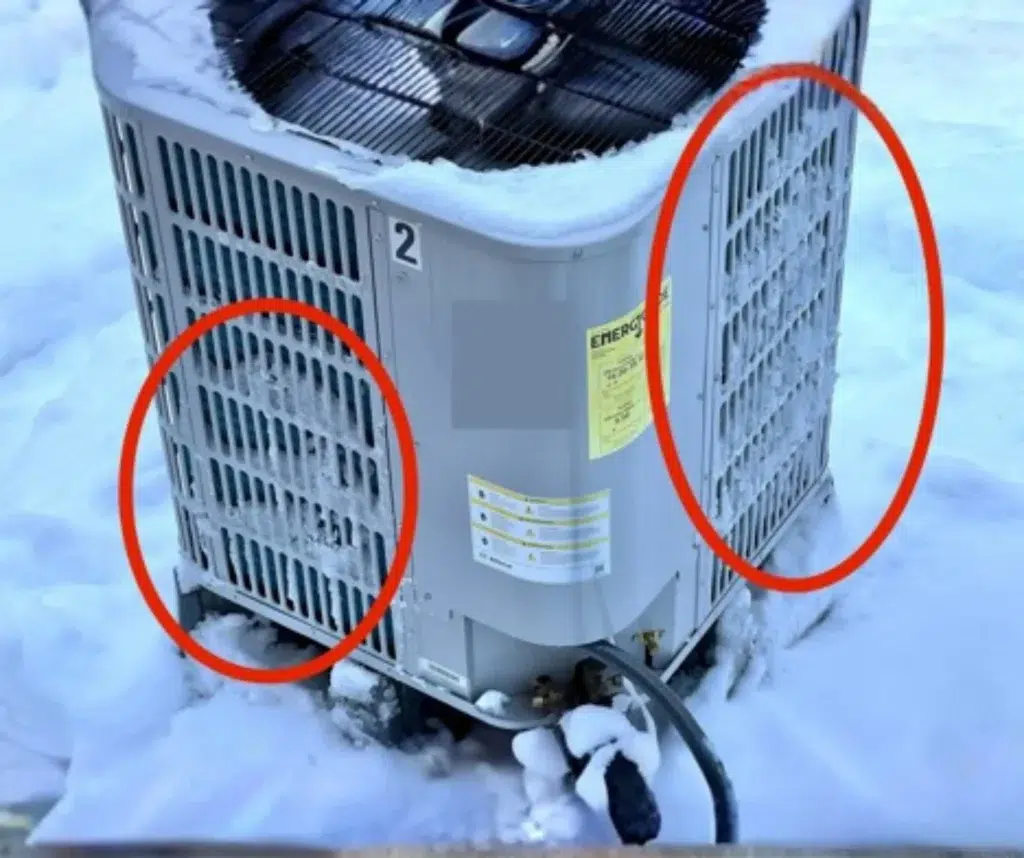
During cold seasons, the outward unit may be covered with ice or snow. If you notice ice buildup:
Gently Clean Ice: Ice and Snow Clean the unit with a brush or cloth to avoid damaging it.
Check Future Accumulation: Be aware of ice in very cold climates. Check frequently and scrape ice where necessary.
To avoid the snow accumulation, it is better to install a cover or canopy but it will be necessary not to obstruct airflow.
Low Refrigerant and Ductwork
Identifying Low Refrigerant
Minimal levels of refrigerant may have serious impacts on the performance of your heat pump. Refrigerant plays a very important role in the heat transfer capabilities of the heat pump in that without adequate concentration the system will not be able to work.
Signs of Low Refrigerant
Early detection of low fridge refrigerant level can deteriorate other more critical problems, which include compressor damage. Signs include:
Continuity: When the heat pump is switched on and it is not able to cool or warm efficiently, then the heat pump might be having difficulties to transfer adequate heat.
Abnormal sounds: Hearing noises of hissing, bubbling, or feeling that the air pressure is too low and this is an indication of leakage of the refrigerant, which is urgent.
In case you want to suspect that you have low refrigerant, you should immediately call a professional and ask him to check and refill your system.
Ductwork Issues
The performance and efficiency of your heat pump can be impaired by leakages and blockages in the ducts which may result in increased energy expenses and room temperatures that are inconsistent.
Duct Inspection Steps
- Check Visible Ductwork: Check whether there are any evidence of leakage or damage. Make sure that there are no holes, lesions, or unattached parts that might give way to air.
- Seal Leaks: This would use duct tape / mastic sealant to plug up any leaks that you have identified. Ensured sealing helps it to avoid any air leakage and increases the performance of the system.
- Get Professionals Hired: This is to consider having a professional hired to check and clean your ductwork periodically with the exception of when you realize that there is too much dust or uneven temperatures in your entire house.
When to Call a Professional
Most of the problems that are faced by heat pumps can be sorted by simple troubleshooting but some necessitate the services of professionals. An understanding of the need to call a professional comes in handy in avoiding post-damage.
Signs You Need Professional Help
- Constant Problems: When you have done all these checks on your heat pump and it still does not work well then it is time to call a professional.
- Complex Repairs: The issues that touch on electrical components or refrigerant level or compressor failures are normally accompanied by special skills and equipment. When one tries to do complicated repair work without the required knowledge, things may end up becoming a lot worse.
- Annual Maintenance: Future breakdowns can be avoided by conducting regular maintenance with a professional. Request a professional to clean and maintain your heat pump so that it will be able to run effectively and be able to last longer.
Benefits of Regular Maintenance
- Long Lifespan: Lifespan Like any other appliance, the maintenance of your heat pump could be a boost to its life. Frequent check-ups will mean that minor problems will be dealt with before they become expensive repair jobs.
- Highly Efficient: This properly maintained heat pump operates efficiently and consumes less energy that helps in saving on utility bills.
- Improved Performance: Routine checkups will assist in determining areas in which your heat pump may be improved to enhance its performance be it in the form of duct cleaning, re-calibration of the thermostat, or changing outdated filters.
- Professional Insights: HVAC specialists can provide useful tips regarding how to make settings depending on the seasonal variations and, therefore, assist you in maximizing your heat pump.
Conclusion
An ineffective heat pump is also somewhat inconvenient, and with the help of the following troubleshooting measures, you may have the opportunity to identify and fix the problem independently. To make the process of heating and cooling more enjoyable, one should learn to operate your heat pump, perform the necessary maintenance and intervene in time when certain issues appear.
With this kind of proactivity and knowledge, you will have your own house comfortable throughout the year. Investing in your heat pump by taking time and effort to undertake routine checks or professional servicing will save you money in the long term by making your heat pump more efficient, comfortable and save patients.
Budgeting the time to learn how your heat pump works can enable you to deal with simple problems on your own. Watch out and remember to actively partake in safety and never underrate the need to take professional assistance. In the proper way, you will know your heat pump can be a worthy option in the heating and cooling of your home.
Frequently Asked Questions
My heat pump isn’t heating. What should I check first?
First, ensure the thermostat is set to “Heat” and the temperature is set correctly. Then, check your circuit breaker and the unit’s power switch. Finally, inspect the outdoor unit for debris or ice buildup that could be blocking airflow.
How often should I replace my heat pump’s air filter?
Check filters monthly. Replace standard 1-inch filters every 1-3 months, or as needed. Homes with pets or high dust levels may require more frequent changes. Clean filters ensure efficient airflow and system performance.
When should I call a professional for my heat pump?
Call a technician for electrical issues, refrigerant leaks (hissing sounds) or compressor problems. Professional annual maintenance is also recommended to prevent future breakdowns and ensure efficiency.
